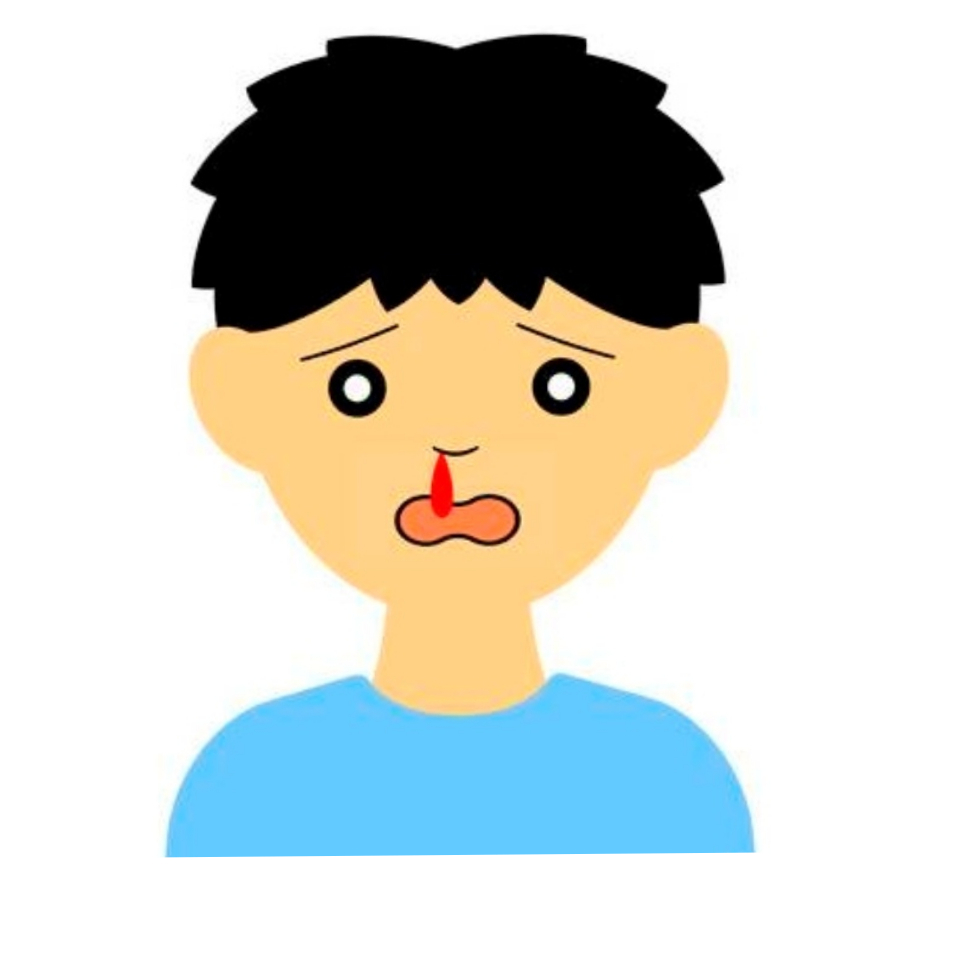
What is epistaxis?
Acute hemorrhage from the nostril/ nasal cavity/nasopharynx. This common among the children.
What are the common areas?
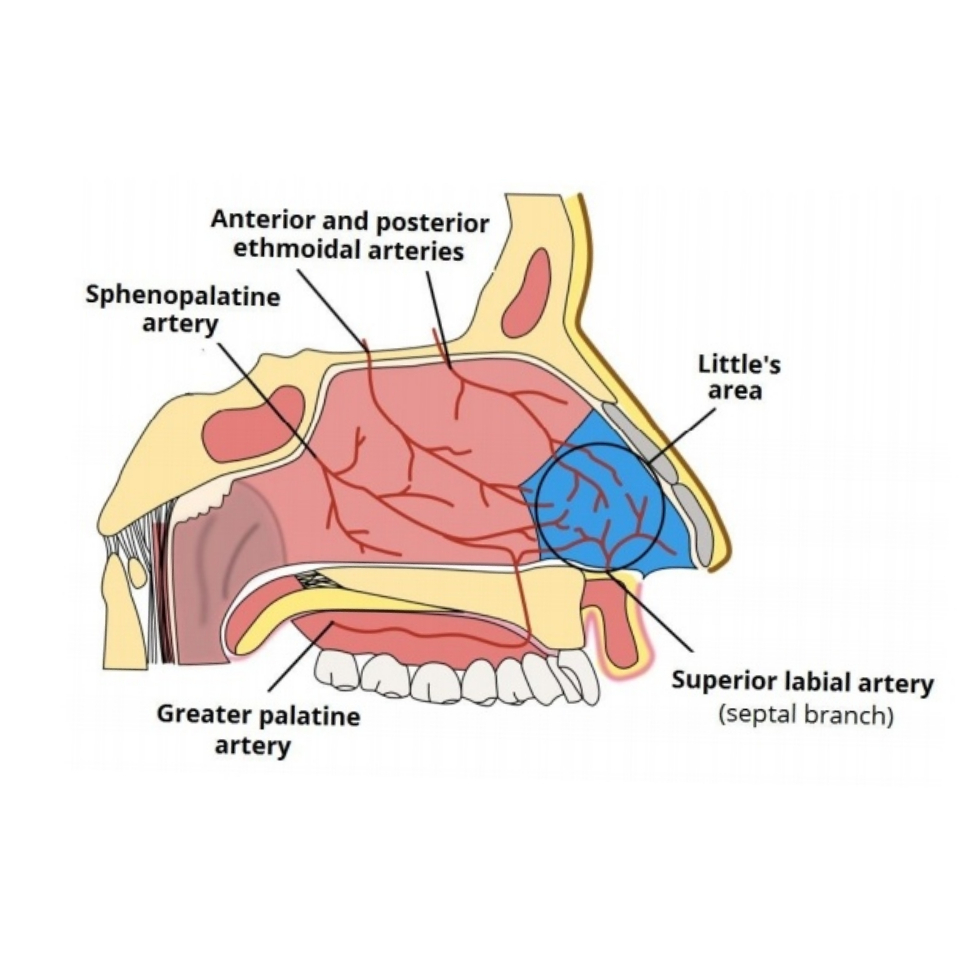
90% occurs from anterior nose. Most commen site is litle’s area. Because there are 4 arteries anastomose in here. Also bleeding can occur from posterior part of nose,septem and lateral wall.
What are the causes?
- Trauma
- Underlying pathologies
- Hemophilia
- Hepatic failure
- Rhinitis
- Endometriosis
- Kidney diseases
- Hypertension
- Tumor
- Toxicity
- Irritants
- Medications
First aid for epistaxis?
- Gear
- Lighting
- Positioning
- Basin
- ABCs (A irway, B reathing, and C irculation)
- Stable patients should be instructed to grasp and pinch their entire nose, maintaining continuous pressure for at least 10 minutes.
- Make sure that they compress the soft nose tissues against the nasal septum; pinching the hard, incompressible nasal bones will not aid for hemorrhage control.
- Ice on nasal bridge
After that your doctor will do following procedures
- If a bleeding point is easily identified, gentle chemical cauterization may be performed.after the application of adequate topical anesthesia.
- Thermal cauterization using an electrocautery device is reserved for more aggressive bleeding and is done with the patient under local or general anesthesia.
- If attempts to control hemorrhage with pressure or cauterization fail, the nose should be packed.
You must careful about nasal bleeding because it may be symptom of some serious illness.
 Healthiest Life